 |
| Gnarly. |
12 June, 2014
Damn nature, you scary!
Witnessed this mad scene at Stokes Field yesterday evening- an Assassin Empid fly dispatching and sucking the life out of an unfortunate Crambus lathoniellus whilst at the same time hanging from a leaf with one leg. I don't know whether to applaud the thing or feel scared for the human race...
10 June, 2014
Sloe Pug
 |
| Sloe Pug |
This dull grey-looking moth, caught in the garden last night, may not seem like anything interesting to the conventional mind, but to me it's a priceless reward for three years spent examining Green Pugs to finally come across the distinctively curved outer-edge to the post-medial band shown by Sloe Pug, the less common of the two confusion species.
Yeah, I am genuinely that sad.
09 June, 2014
Great Oak Beauty
Whilst I consider whether it might be more appropriate to rename the blog 'Bill's Mothing', here are some moths from the garden last night. The white sheet above the trap was still crawling with moths when I finally hit the hay at 2am, so heaven knows what was missed as I slept through the 4:30am alarm and finally awoke to an almost empty trap at 10am.
It's a miracle that this Great Oak Beauty remained undisturbed all morning, but I'm grateful it did- a very welcome first for the garden. Despite its nationally scarce status, the moth appears to be quite well distributed through Surrey with several fellow enthusiasts also getting lucky this week...
It's a miracle that this Great Oak Beauty remained undisturbed all morning, but I'm grateful it did- a very welcome first for the garden. Despite its nationally scarce status, the moth appears to be quite well distributed through Surrey with several fellow enthusiasts also getting lucky this week...
 |
| Great Oak Beauty- to give an idea of size, I had to pot it up in a pint glass. |
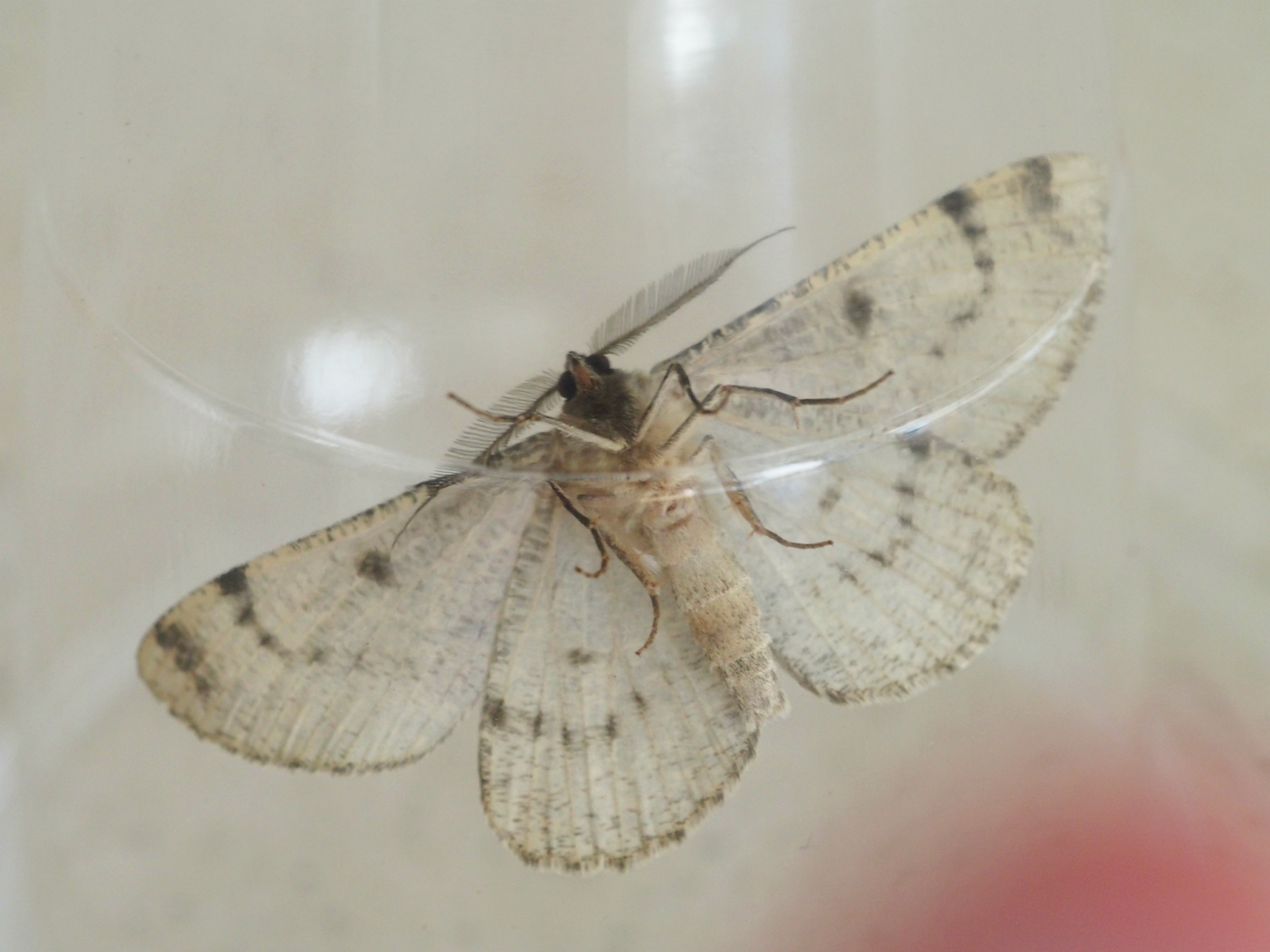 |
| The diagnostic underside markings. |
 |
| Heart & Club and Heart & Dart |
 |
| The Sycamore- another addition to the garden list, though quite literally overshadowed by the Beauty. |
08 June, 2014
Big things in small packages
It's always nice to find something completely unexpected on a local patch, but it's just that extra bit nicer when it happens to be an orange moth called Commophila aeneana. Hundreds of these dazzling little micros were flying in an abandoned rose field yesterday evening, constituting what appears to be one of the few county records of a colony away from chalk...
 |
| Commophila aeneana- an unmistakable moth scarcely distributed in the southern counties, feeding on Ragwort. |
 |
| The same rose field held Tree Pipit and Redstart last year, as well as various other notable invertebrates. |
 |
| In all the excitement, I almost completely ignored a single flowering Pyramidal Orchid- a mystical beast of a plant at Stokes Field. |
Stokes Field has always held a place close to my heart, not least because it's completely untouched in the way of entomological coverage, but also because I originally cut my ornithological teeth there; staring on in awe at the sight of my first local Nuthatch many years ago. Inevitably, being so accessible to the surrounding housing and with so little designated protection, the site has become dominated by dog walkers and nocturnal fun seekers, making it sometimes more of a hassle to visit than it's worth.
It's evenings like yesterday, with the last rays of sunlight illuminating the grass and enigmatic moths flying about, that make me question how my interest in this little oasis could ever wane...

06 June, 2014
A Stag with longhorns
I figured the blog has been a bit biased towards moths recently, so here are two fantastic beetles to even things out; both of which have graced the garden in the past couple of days. I've lucky enough to be able to say that the Stag Beetle- now a globally threatened species- is an annual occurrence here, often taking respite in the garden from their ungainly evening flight. The longhorn is completely new, and arrived out of the blue to perch on the front door this afternoon...
 |
| Stag Beetle |
 |
| Stenurella melanura (Black-striped Longhorn) |
04 June, 2014
Hoary Footman
You don't need to go far to read about the disheartening decline exhibited by moth (and butterfly) populations throughout Britain. The outlook is sombre for many species, caused largely though human exploitation and destruction of delicate habitats.
Luckily, there are a number of moths currently fighting against the trend. In particular, species such as Small Ranunculus, Toadflax Brocade, Jersey Tiger and Tree-lichen Beauty are establishing themselves in towns throughout central and southern England, despite having previously been restricted only to the most coastal localities. Hoary Footman is another example of a recent expansionist; historically found around sea-cliffs along the south-west coast but now widespread in the London suburbs. Quite why it's population has suddenly boomed is beyond me- perhaps it has something to do with improving air quality, and the subsequent surge in abundance of lichens upon which the larvae feed? Whatever the cause, it's a pleasure to have in the garden, and last night saw the much anticipated arrival of this year's first...
 |
| Hoary Footman- coming to a garden near you. |
03 June, 2014
A mystery sound in the woods

Strolling through beech woods along the North Downs Way yesterday morning, I couldn't help but feel a little wistful for the sea of bluebells that carpeted the ground just a few weeks ago- now completely replaced with bare ground, bracken and leafing trees. The bluebell spectacle is by far my favourite event on the nature calender, but it's always surprising how quickly they come and go.
Out on the chalk slopes it was a different story, with Common Spotted Orchid, Chalky Milkwort, Rock-rose, Germander Speedwell and all manner of wild herbs adding an array of colour to the downs. With the plants came the top-quality moths, including a few which have managed to evade me in the past. The nationally scarce Stephensia brunnichella was abundant around clumps of Basil, as was Mompha miscella around its foodplant, Rock-rose. It's a miracle I even managed to get a shot of the Mompha- its tendency to scurry through the long grass made it an absolute nightmare to photograph; not helped by the fact that the subject itself was just a few millimetres long!
 |
| Stephensia brunnichella |
 |
| Mompha miscella |
With things on the invertebrate front going better than expected, I decided to try my luck at finding Britain's smallest 'longhorn', Cauchas fibulella around Germander Speedwell, its foodplant...
 |
| Well, what do you know- I found it... Cauchas fibulella. |
 |
| Pancalia leuwenhoekella- one of the commoner day-flying moths on chalk downland. |
I've often stumbled across the empty shells of Roman Snail whilst out on the downs, but until today I'd never seen one with an actual snail inside. These gigantic molluscs stick out like a sore thumb to predators; it's no wonder they're so rare nowadays..
 |
| Roman Snail with quite a big phone. |
I'm sure I'll be kicking myself when I finally work it out, but in the meantime feel free to put me out of my misery...
01 June, 2014
Night of the nondescript
The mild, cloudy weather of late held out for the majority of last night- perfect conditions for a moth or two. The alarm woke me up at half 4 this morning, and I was soon confronted with the satisfying (but slightly daunting) sight of hundreds of moths settled in and around the moth trap. The fantastic acrobatics of some late-to-bed bats provided welcome entertainment whilst I processed the catch, their silhouetted bodies effortlessly swooping over the trap and frequently landing on the vertical concrete walls of the neighbouring house- no doubt taking advantage of the free meals on offer.
Thankfully, 57 species of moth survived the night- the highlight being this rather underwhelming micro which looks set to be Mompha sturnipennella, a rare species in the county. Problem is that it's rather similar to Mompha subbistrigella, so will have to be examined up close with a microscope to confirm its identity...

It really was night of the nondescript, with the very grey Exoteleia dodecella and the even greyer Glyphipterix fuscoviridella being notable records for the garden.
Other highlights included fantastic examples of Buff-tip & Lime Hawk-moth, as well as these characters...
I wouldn't normally put the trap out two nights in a row, but with the mild weather set to continue who knows what's out there...
Thankfully, 57 species of moth survived the night- the highlight being this rather underwhelming micro which looks set to be Mompha sturnipennella, a rare species in the county. Problem is that it's rather similar to Mompha subbistrigella, so will have to be examined up close with a microscope to confirm its identity...
It really was night of the nondescript, with the very grey Exoteleia dodecella and the even greyer Glyphipterix fuscoviridella being notable records for the garden.
 |
| Exoteleia dodecella |
 |
| Glyphipterix fuscoviridella |
Other highlights included fantastic examples of Buff-tip & Lime Hawk-moth, as well as these characters...
 |
| Argyresthia spinosella |
 |
| Buttoned Snout |
 |
| Dwarf Pug- just about. |
 |
| Prays fraxinella |
I wouldn't normally put the trap out two nights in a row, but with the mild weather set to continue who knows what's out there...
31 May, 2014
Kempton Nature Reserve
I visited Kempton Nature Reserve this morning to help Paul Wheeler search for the larval stages of the tiny micro moth, Neofriseria peliella. It's a member of the large family Gelechiidae, and has historically been restricted to only a handful of sites along the coast of Kent. It was therefore quite a surprise when two individuals turned up at a moth trap on the Middlesex reserve last summer, almost 100 miles from the only other known site for the species! The larvae feed on sheep's sorrel, and much of the morning was spent on all fours examining the stems of plants for evidence of the inconspicuous silk tubes within which the larvae develop. Neither of us wanted to admit the fact that it was very much a needle in a haystack job, and after a few hours of unsuccessful plant fondling, we called it a day. Moth-trapping in the next few months hopefully help determine whether an established population is present on site.
The reserve itself- which is only accessible for those with a Thames Water membership permit- is nothing less than a gem amongst the urban sprawl of Sunbury and Hanworth, combining short-turf downland with some fairly extensive reedbed and wetland habitats. Certainly worth another visit as the season progresses...
 |
| Alabonia geoffrella- one of late spring's best kept secrets, flying throughout the reserve. |
 |
| Four-spotted Chaser |
 |
| Acrocercops brongniardella- a larval leaf mine on oak. |
29 May, 2014
Storm respite
A couple of hours respite from the constant rain was enough to encourage invertebrates of all sorts onto the wing at Esher Common this afternoon. Nemapogon cloakella, Epinotia tetraquetrana, Epinotia cruciana, Neofaculta ericetella, Ptycholoma lecheana and Emmetia marginea were all netted within 5 minutes of leaving the car park, more than making up for the recent moth drought.
A Black-tailed Skimmer hawked over Black Pond, but unfortunately no sign of Brilliant Emerald- small amount of coppicing appears to have been undertaken in the area they frequented last year, and I just hope that hasn't put them off hunting there this year.
By far the coolest find of the day was this leaf beetle, Clytra quadripunctata. Larvae develop in the nests of wood ants; this one was perched just a short distance from a busy Formica rufa foraging route...
A Black-tailed Skimmer hawked over Black Pond, but unfortunately no sign of Brilliant Emerald- small amount of coppicing appears to have been undertaken in the area they frequented last year, and I just hope that hasn't put them off hunting there this year.
By far the coolest find of the day was this leaf beetle, Clytra quadripunctata. Larvae develop in the nests of wood ants; this one was perched just a short distance from a busy Formica rufa foraging route...
 |
| Clytra quadripunctata |
 |
| Merodon equestris- a fantastic bee mimic hoverfly! |
Subscribe to:
Posts (Atom)