30 March, 2016

Spring flowers

Winter always wrecks havoc on my natural history knowledge, and I find my first few spring outings are usually spent getting to grips with the various flora and fauna I've simply forgotten the names of since I last saw them a year ago.

This is especially true when it comes to plants. People often tell me that all moths look brown and confusing, but plants are a whole new level of baffling - especially when all you have to go by are the leaves! Last year I bought myself one of those vegetative keys; completely devoid of pictures but with a promise on the blurb that the key will make identification of wild flowers 'swift and easy' for beginners with use of a 'minimal number of technical terms'. Excited and eager, I turned to the description for Bluebell and my heard sank:

"Lvs 3-6, 0.7-1.6cm wide. Raceme 1-sided. Fls all soon nodding, fragrant; stamens unequal; anthers cream"

I've been too frightened to use the key since. Luckily, the plants in flower today on my stroll to the local woods weren't quite so hard to identify...

Greater Stitchwort
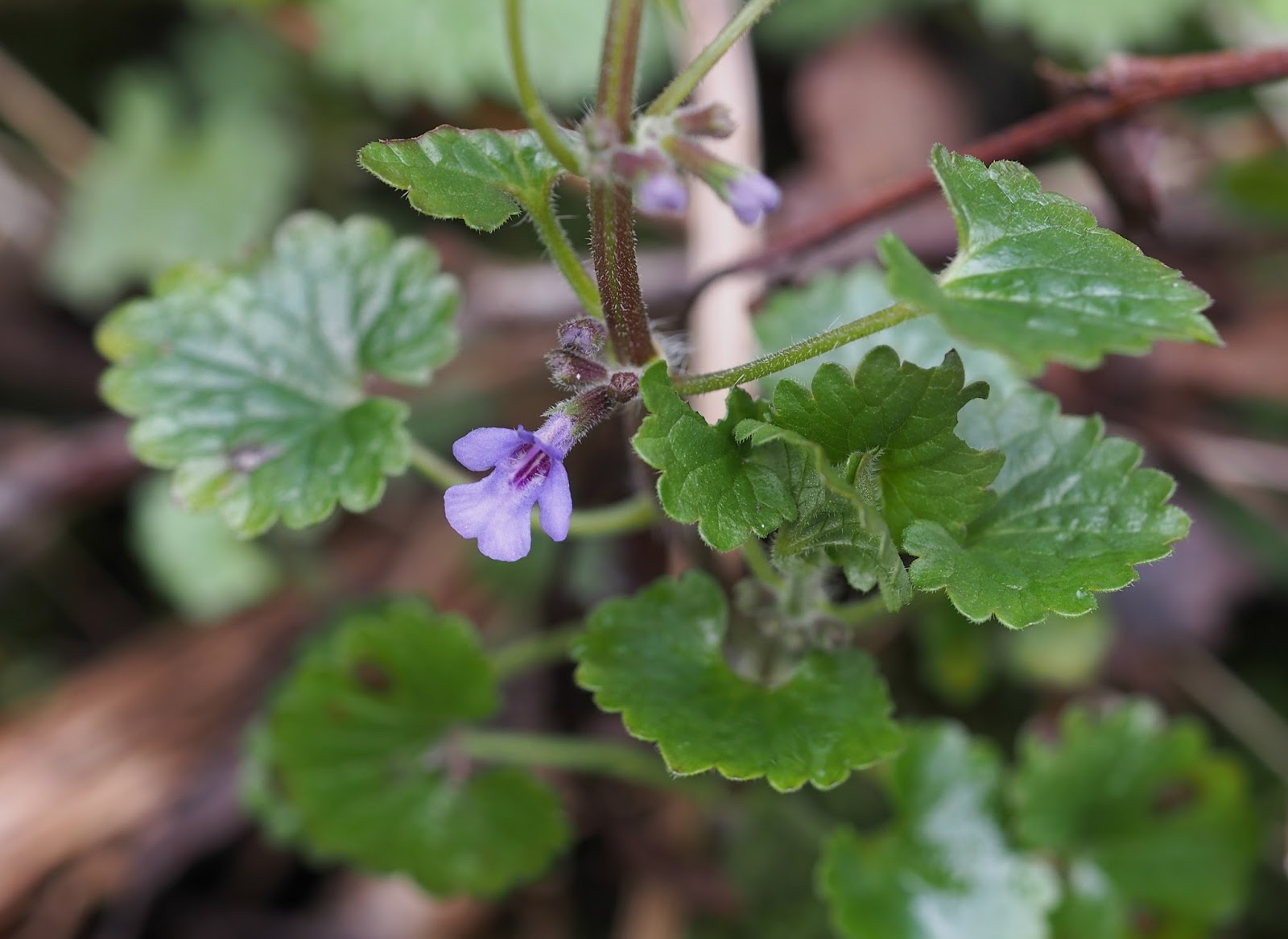
Ground-ivy

Ivy-leaved Speedwell

Barren Strawberry

Lesser Swine-cress

Bluebell


Wood Anemone

A carpet of Lesser Celandine

It well and truly felt like spring, but I'm now beginning to wonder whether the lure of such fantastic countryside just a 15 minutes walk from my student house is going to prove detrimental in the last few months of my degree!

28 March, 2016

Last week's haul

Last Tuesday saw the return of the balcony moth trap to our student house for the first time since a highly productive session in late October last year. The result was 18 moths of 8 species, including a spring moth that has eluded me for eternity - the Shoulder-stripe.

2 Shoulder-stripe
7 Hebrew Character
1 Chestnut
2 Clouded Drab
3 Common Quaker
1 Small Quaker
1 March Moth
1 Depressaria daucella

A stunning Twenty-plume Moth (Alucita hexadactyla) was flying around the lounge on Friday morning.

Twenty-plume Moth

March Moth

Shoulder-stripe

14 March, 2016

The power of the sun

Coming off the back of a cloudy and drizzly week, I love the way that early spring sunshine has the ability to warm crisp March air and accentuate bright colours displayed by hardy, early season roadside flowers - particularly Lesser Celandine and Daffodils. It also has an unrivaled ability to send my motivation to get out and appreciate wildlife into overdrive (much to the annoyance of my dissertation!), so you can imagine I've been making the most of this little spell of golden weather we've been experiencing up in Worcester these past few days.

On Saturday morning I took a stroll down a local wooded footpath with a moth net - more out of hope than expectation - but soon stumbled across Mompha jurassicella flying weakly in the dappled sunshine. This is the 4th individual I've found locally over the past two years, suggesting that isn't quite as rare as the lack of Worcestershire records might imply.

Yesterday saw myself and a couple of friends head over to Grimley Camp Lane Pits in search of early migrants - Sand Martin and Little Ringed Plover being top of the wish list. Neither materialised, but it was just nice to be out with the binoculars again. We had the luxury of a car to ferry us between locations which meant that I could afford to carry a little bit more gear - I opted for the the telephoto lens which, only a couple of posts ago, I said I'd more than likely never use again...

Mompha jurassicella

 Beautiful bird, rubbish photo. It's a start though.

29 February, 2016

Salticus scenicus

Last week I partook in my first twitch of the year, hoping to show a friend the overwintering Short-eared Owls at Kempsey just a couple of miles south of Worcester. Despite being reported on a daily basis since the start of February, with up to five openly hunting across fields in broad daylight, we failed to connect with the birds in the two hours spent searching, and our attention inevitably turned to the local insect life.

On the south-facing wall of Kempsey church - extremely well camouflaged against the stone - Jumping Spiders (Salticus scenicus) were hunting too...


18 February, 2016

Signs of spring

Took a walk along the footpath that run by the side of our student house this morning, in the hope that fresh air would shrug off the last of a cold that has been nagging at me for the past week.

I don't want to speak too soon but it seems to have done the trick. Lying in bed with the curtains drawn swallowing paracetamol every few hours does nothing for me, but just a few minutes standing outside with the sun on my face worked wonders on clear the feeling of grogginess from my head - there were even some signs along the path that spring is just around the corner.


Phytomyza ranunculi leaf mine

Pseudotaxiphyllum elegans


Carpets of Lesser Celandine decorate field margins and road sides throughout Worcester at the moment

13 February, 2016

New blog header

Regular (and irregular) visitors will notice that I've added a new header to the blog - a photo of a Short-eared Owl quartering Staines Moor on a crisp, misty December afternoon back in 2012.

Compared to previous headers of late, this one is slightly different in that the subject is a bird and not a moth - the first such bird photo I've uploaded to the blog since January 2015. What started out back in 2008 as a medium through which to 'showcase' my awful bird photography in Bushy Park has - over the years - turned into an almost solely insectivorous blog.

It's quite interesting, for me anyway, to look back and find the point at which blog content switched from birds to other stuff. Such a transition seems to take place in spring 2013, when I attempted to take on pan-species listing for the first time as part of the '1000for1ksq' challenge - mosses, plants and other taxonomic groups I wouldn't have previously batted an eyelid at started to appear, and birds have taken a bit of a back foot.

I do hope to get more content posted up here as the weather begins to warm and things begin to emerge from the cold, but the likelihood of this including anything much bird-related is doubtful. I still take my binoculars wherever I go and get great enjoyment out of birding, but that is as far it goes. I no longer worry about photographic opportunities I could miss out on if I go out birding without my DSLR, and as a result my motivation to carry it is dwindling.


In other news, Black Sabbath's self-titled debut album is 46 years old today. Enjoy. 

29 January, 2016

Malta

With a reading week at uni and some holiday hours to take off work, myself and a couple of friends decided to book a four-day holiday to Malta.

Malta has never been top of my list of places to visit - mainly because, like many birders, I've been off-putted by the bird hunting atrocities that appear in the news every spring, but I was pretty easily swayed by the promise of sun, sea and good beer, and we set off on Thursday last week.

The first two days were spent visiting various historical towns and cities around the island, admiring the beautiful architecture and eclectic culture. The island has clearly been influenced by the colonies that have landed on its shores (evident by the fact that almost all locals are fluent in English and every other bar is an Irish Pub), but it maintains a really unique sense of individuality and tradition that no amount of British tourism could break.


We spent the last two days exploring the more remote west coast of the island, characterised by high cliffs, scree slopes, megalithic temples and 360 degree views. Blue Rock Thrush flitted between the boulders, whilst Sardinian and Cetti's Warblers sung from the dry scrub. One of my friends is current undertaking a horticulture internship back at home, so we spent a fair amount of time getting our heads around the local cliff top flora. Maltese Spurge - a species endemic to the archipeligo - decorated much of the upper slopes, interspersed with clumps of the tiny Mediterranean Heather and delicate Bunch-flowered Daffodil.


Mediterranean Heather (Erica multiflora)

Maltese Spurge (Euphorbia melitensis)

Bunch-flowered Daffodil (Narcissus tazetta)


Further north we stopped off at Ghajn Tuffieha, a collection of steep-sided turquoise bays composed entirely of sandstone. Sublime...


Cape Sorrel (Oxalis pes-caprae)

And all that done using only the island's well established network of buses - leagues ahead of public transport in London.

14 January, 2016

Binocular psychology

It's been a slow start to the year in terms of wildlife opportunities. A combination of coursework deadlines, job commitments and the grogginess of the weather here in Worcester have kept me inside for a large proportion of the past two weeks.

Last week I did go and treat myself to a new pair of binoculars from The Birder's Store in Worcester town centre. Brian was as helpful as ever and I ended up leaving with a brand spanking new pair of Opticron's Discovery 10x42. My technical know-how when it comes to optics is non-existent (I couldn't for the life of me tell you what the '42' in '10x42' means) so I won't even attempt to review them, but these look and feel fantastic for the modest price tag, and the compact design is perfect for the 'sling-over-your-shoulder' way I want to use them.

I never really got on much with binoculars, this being only the second pair I've owned. Wearing them around your neck gives you away as a bit of an anorak - or so 16-year old me thought - and that wasn't the type of self-image I wanted to promote. In the same vein as other people growing up with a passion for natural history, it felt as though no one in my school shared my interests, and I was afraid I might be seen as uncool if people caught wind of it. As a result, for most of secondary school, very few of my friends knew that I liked birds, and even fewer of them knew that I went birding around the local area on a daily basis - it was something I tried to keep secret; hiding away my binoculars whilst walking to my local park until I was sure there was no chance of bumping into someone I knew.

It hasn't been hard to notice a heartening change in young people's attitudes towards the hobby, as various platforms of social media (Twitter in particular) have helped link up like-minded people across the country. When I was school aged, only six or seven years ago, I'd come home and share my sightings to a tiny handful of other 'young' birders through the now dormant Young Birders blog. Fast forward to 2016 and the Next Generation Birders crowd now has almost 650 Facebook members and 4,000 Twitter followers; regularly organising field trips and socials for members. Every other post on my Twitter news feed seems to celebrate the actions of teenagers promoting wildlife within their school or wider community, and it's welcoming to see that they don't identify a passion for wildlife as something to be reserved about in the way that I did. It's fair to say that birding has never been so popular amongst youngsters.

On an unrelated note, I've noticed several other bloggers subtly drop-in links to songs at the end of their posts, and it works well - so much so that I might start adding more music to this blog in 2016. This week's artist was inevitable.

31 December, 2015

Happy New Year

Wishing you all a fantastic new year from both myself and this Tortricodes alternella that turned up at a lit kitchen window last night.


Be sure to make 2016 the year you express yourself.


30 December, 2015

A trivial quest


It's late June. The height of summer. Flowers are appearing everywhere and the weather has been kind to us on the west coast of Mull for the past week. There are 20 hours of daylight in a 24 hour period, and it seemed like the ideal time to find my way seventy odd miles to the other side of the island in search of one of the rarest moths in Britain; the Slender Scotch Burnet.

Chimney Sweeper

Small Pearl-bordered Fritillary

Starting at the croft late in the morning, I walked for a feet-busting 16 miles along the A849 - the main road connecting each corner of the island - spurred on every few metres by the appearance of Small Pearl-bordered Fritillary, Chimney Sweeper and Marsh Fritillary feeding amongst the abundant roadside vegetation.

Clouds over Ben More

I reached Tobermory late in the evening, having hitch-hiked half way across Mull with a young couple driving their camper van back to Yorkshire - they'd spent the last few days at a music festival on Iona. I checked into the youth hostel, stumbled towards the harbour for fish & chips (and a drop of the town's esteemed whisky), and devoured it all on a golf course while watching dusk fall over the island.


Looking south from Tobermory golf course - mainland Scotland is on the left and Ben More (Mull's highest mountain) can be seen peeking over the headland on the right.

The next morning I was up and out by first light; the destination a sheltered patch of coastal grassland tucked away behind a small private castle called Glengorm, where Slender Scotch Burnet has one of its only strongholds in the UK.


The castle itself stands alone in a remote & windswept landscape, well away from the nearest crofts. Getting to it requires a six mile drive along a thin, curvy road - up and down steep hills, through lush grassland pastures and alongside thick pine forests. Without a car it was a tiring four hour stroll, but one of the most tranquil I've ever experienced. I was 70 odd miles from the croft I was working on and hundreds more away from home, relying only on my limited ability to hitchhike to get back for the night. I was in the middle of nowhere and no one was expecting me anywhere. There were no deadlines to fulfil. It's hard to explain but I felt completely disconnected from any obligations other than my trivial quest to see a rare moth, and it felt really nice.


By 10am the wind had subsided and the sun - already high in the sky - was parching the coastal grassland behind the castle. Conditions were perfect and the shoreline resembled classic Zygaena habitat; short grassy turf intertwined with numerous Bird's-foot Trefoil and the strong, aromatic smell of flowering Thyme. It didn't take long to find a Slender Scotch Burnet resting on a grass stem, followed by another, and another. They were easier to identify than I'd initially imagined; noticeably smaller than the Six-spot Burnets also present and almost always with the two spots closest to the end of the wing fused together. I stuck around for a couple of hours - watching a White-tailed Eagle soar on thermals overhead and a small pod of Bottlenose Dolphins out at sea - before starting on the long journey back to the croft.

Slender Scotch Burnet

Pyrausta cingulata

This post is part of a wholly inconsistent, seldom updated series on my time spent working on organic farms in the Hebrides this summer. You can find the previous posts here: